
· by Michael Blair, Nashville's Insulation
Water vapor moves from hot to cold and from wet to dry, as the Building America Solution Center’s guide to vapor retarders in warm-humid climates puts it. In a Middle Tennessee house that sends it outward through the walls while the heat is on, and inward on a humid summer afternoon, which is why we ask which way the moisture is moving before we put a vapor retarder anywhere.
Why does the direction vapor moves matter?
Direction decides which surface vapor condenses on: in winter the house is the warm side, and moisture made indoors works its way toward the cold sheathing. In summer, with the air conditioning holding the rooms cooler and drier than the yard, the same guide explains that vapor migrates from outside in, straight through air-permeable insulation such as fiberglass, mineral wool or cellulose.
Put a vapor retarder on the room side of that wall and it becomes the cool surface the incoming vapor meets. The water condenses there with no way to dry to the inside. The EPA’s mold course on why and where mold grows makes the wider point that vapor barriers can keep damp building materials from drying fast enough to prevent mold.
What the mixed climate calls for
By a mixed climate we mean one with a real heating season and a humid cooling season. Federal guidance for humid climates keeps Class I vapor retarders, materials rated at 0.1 perm or less such as polyethylene film, foil-faced sheathing and vinyl wallpaper, off the interior side of air-permeable insulation, and calls for Class II or III finishes like painted drywall so the wall can dry inward. Our summers push vapor inward too, so we treat the room side of a wall that way.
Moisture also rides in on air. The Solution Center’s guidance on foundation insulation describes warm, moist air getting into wall cavities through cracks and condensing on the back of a Class I retarder chilled by summer air conditioning. Closing those gaps is our air sealing work, and our post on air sealing before insulation explains why it comes first.
For a permitted job in Davidson County, Metro’s adopted codes list names the 2024 International Residential Code and the 2024 International Energy Conservation Code.
- Seal the air leaks before any insulation goes in
- No polyethylene, foil or vinyl on the room side of fiberglass or cellulose
- Faced batts go in the way the product’s instructions say
- A sealed ground cover in a crawl space, vented or not
- No vinyl wallpaper on the inside of an exterior wall
The crawl space exception
A ground vapor barrier in a crawl space answers a different question. Moisture can come up into a crawl space through the soil, and the Solution Center’s page on crawlspace capillary breaks says the floor should be covered with heavy polyethylene sealed to the walls and piers, whether the crawl space is vented or unvented.
That is different from a vapor retarder in a wall or ceiling, where placement decides whether it helps or does harm. The EPA’s mold course also lists crawl spaces with high relative humidity among the common sites of hidden mold. Ground covers and the insulation above them are part of our crawl space insulation service, and our post on insulating the crawl space or the floor covers which of the two a house needs.
Why is vinyl wallpaper risky on an outside wall?
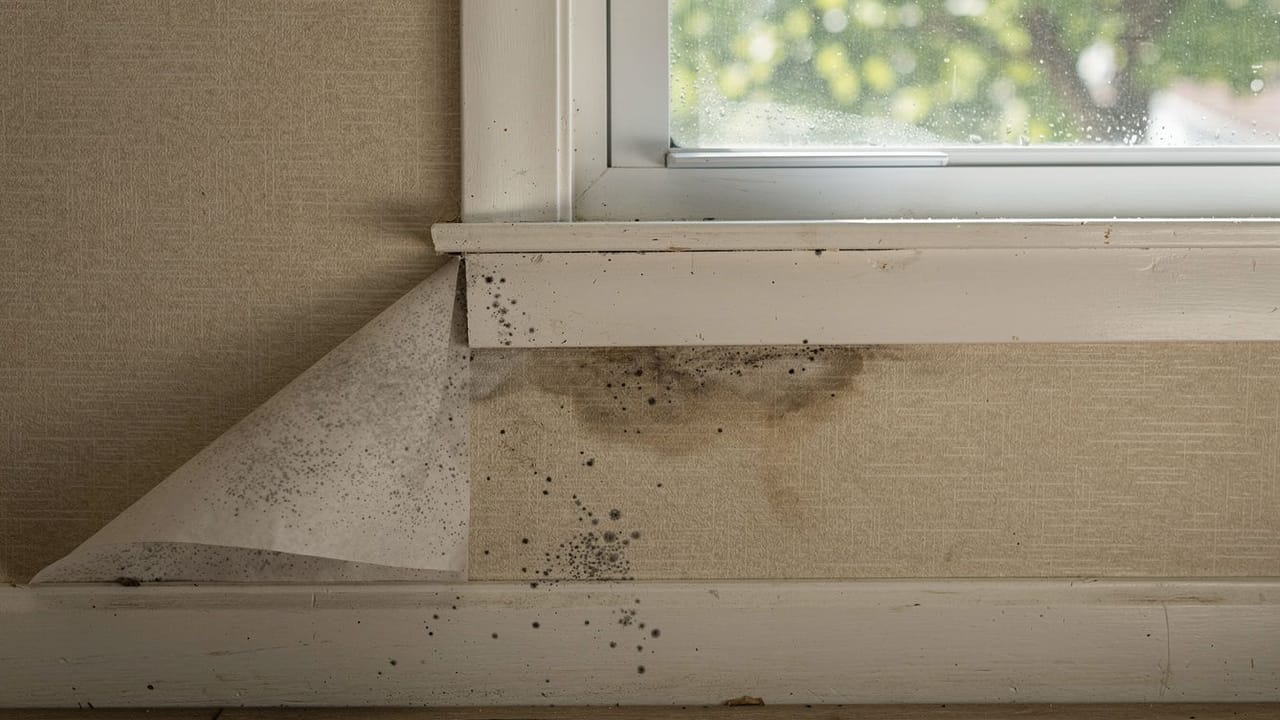
Vinyl wallpaper is on the Solution Center’s list of Class I materials, and its advice for humid climates is that no low-perm finish such as vinyl wallpaper or a mirror be attached to the inside of an exterior wall. On a humid day, vapor moving in through the wall meets the back of the vinyl and condenses there.
The EPA’s brief guide to mold, moisture and your home suggests keeping indoor humidity below 60 percent, ideally between 30 and 50, and warns that taking down wallpaper with mold on its underside can release a large burst of spores. It is easy to miss, since hanging wallpaper feels like decorating rather than building. If a room with vinyl on an outside wall smells musty, ask us to look at it before anyone pulls the paper off.
Sources
- U.S. Department of Energy, Building America Solution Center, Class I Vapor Retarders Not Installed in Above-Grade Walls in Warm-Humid Climate — Vapor moves hot to cold and wet to dry; inward migration through air-permeable insulation; Class I list including polyethylene and vinyl wallpaper; no low-perm interior finishes; walls dry to the inside
- U.S. Department of Energy, Building America Solution Center, No Vapor Retarders on Interior Side of Air-Permeable Foundation Insulation — Moist air entering wall cavities through cracks and condensing on a Class I retarder chilled by air conditioning; ruined insulation, mold and rot
- U.S. Department of Energy, Building America Solution Center, Capillary Break at Crawlspace Floors — Soil moisture enters crawl spaces; heavy polyethylene sealed to walls and piers, vented or unvented
- U.S. EPA, Mold Course Chapter 2: Why and Where Mold Grows — Vapor barriers can keep damp materials from drying; humid crawl spaces are common sites of hidden mold
- U.S. EPA, A Brief Guide to Mold, Moisture, and Your Home — Indoor humidity below 60 percent, ideally 30 to 50; spore release when moldy wallpaper is removed
- Metro Nashville Codes, Adopted Codes List — Metro has adopted the 2024 IRC and 2024 IECC
FAQ
Insulation, Vapor and Middle Tennessee Humidity — questions
Do I need a vapor barrier in Middle Tennessee?
In a wall, it depends on where it would go. Moisture moves outward in winter and inward on a humid summer day, so a low-perm layer on the room side can turn into the cold surface that summer vapor condenses on. Federal guidance for humid climates keeps Class I materials such as polyethylene off the interior side of fiberglass or cellulose. A crawl space floor is different: a sealed polyethylene ground cover belongs there, vented or not.
Which way do faced batts go?
We install them the way the manufacturer’s instructions for that product say. What we look for in a Middle Tennessee wall is a second layer on the room side rated at 0.1 perm or less, such as polyethylene sheeting or vinyl wallpaper, because a wall that cannot dry to the inside can trap summer moisture, and the result can be ruined insulation, mold and rotting framing.
Is vinyl wallpaper a problem on exterior walls?
On a humid summer day it can be. Vinyl wallpaper counts as a Class I vapor retarder, and federal guidance for humid climates says not to attach a low-perm finish like it to the inside of an exterior wall. Moisture moving in from outside can condense behind it, and mold can grow on the underside of the paper where nobody sees it. Few people suspect it, because choosing it feels like a decorating decision.
What does a vapor barrier do?
It slows water vapor moving through a wall, ceiling or floor. The tightest kind, Class I, is rated at 0.1 perm or less, such as polyethylene film, foil-faced sheathing or vinyl wallpaper. Put on the side vapor is moving toward, it can become the cold surface that vapor condenses on, so where it goes matters more than what it is.