
· by Michael Blair, Nashville's Insulation
Not every efficiency job returns the same. ENERGY STAR’s chart of where the savings are puts the attic at the top and doors, windows and walls at the bottom, and spending in that order rather than by enthusiasm gets the most from a budget.
Where should an insulation budget go first?
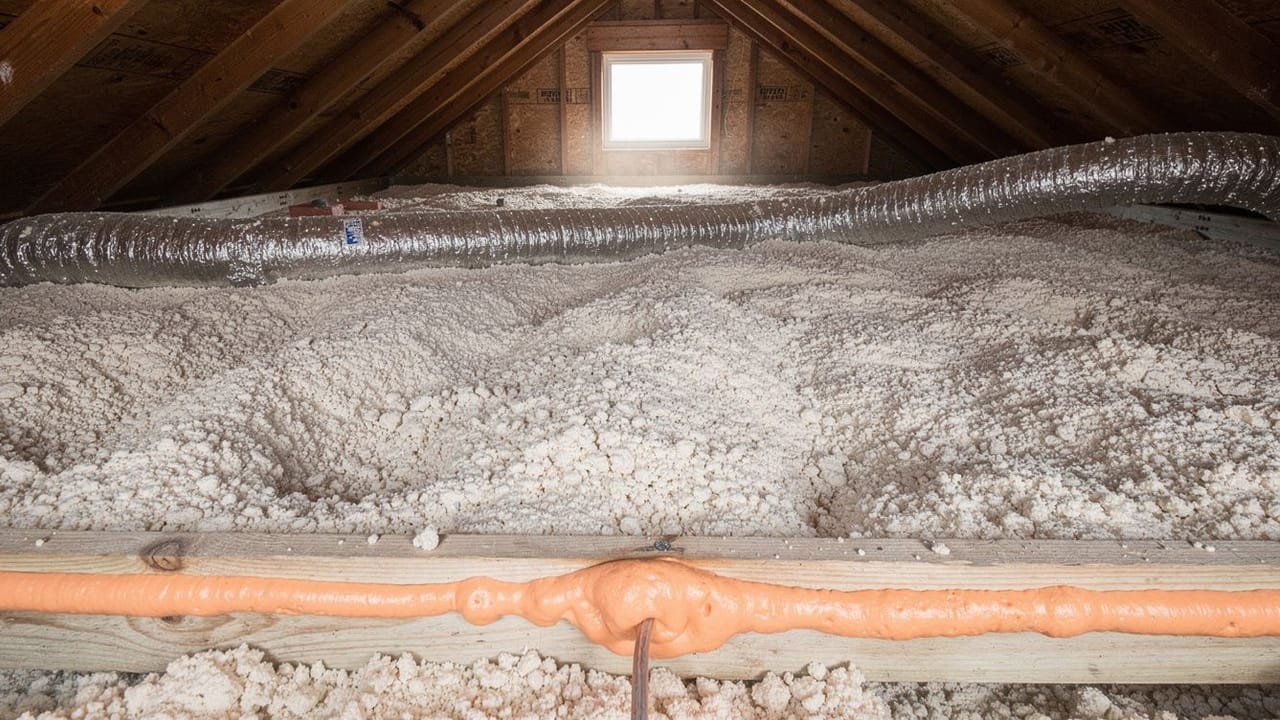
Start in the attic. ENERGY STAR says the attic usually has the most potential for energy savings and that air sealing should always come before more insulation goes down, which is why our air sealing work happens ahead of any attic insulation. Once the attic is done, the same chart names the basement or crawl space as usually the next best place, and it calls leaky ducts a significant source of loss when they run through an attic or crawl space.
ENERGY STAR doesn’t rank the ducts against the crawl space. Where the ducts are up in the attic, it makes sense to seal them while the attic is being worked on anyway, and there’s more on that job in our post on sealing and insulating attic ductwork. Under the floor, crawl space insulation comes after the attic.
Windows and wall insulation come later, even though they’re often the first thing people ask us about. ENERGY STAR’s view is that leaks through doors, windows and walls can cause drafts but usually have the least impact on energy use.
Why do walls rarely pay back in an existing house?
Because walls sit near the bottom of that ranking, filling a closed wall rarely makes sense before the attic, the crawl space and the ducts are done. It isn’t a lost cause, though. TVA EnergyRight’s insulation rebate page says exterior walls should generally be insulated to at least R-13, and that in existing walls, where the gaps can’t be reached for sealing, dense-pack cellulose or fiberglass or blown-in foam gives an adequate level of air sealing too. Our post on insulating the empty walls of an older house covers that job.
The sums change when the walls are already open for a remodel or a rewire, since the cavities are exposed and there’s nothing to drill or patch.
- Air seal the ceiling plane first
- Attic insulation to current depth
- Seal and insulate ducts in unconditioned space
- Seal and insulate the crawl space
- Windows and walls last
Getting an assessment
An assessment before the work keeps you from spending in the wrong place. TVA EnergyRight’s DIY Home Energy Assessment is a free online questionnaire about your house that ends in a dashboard of recommendations, an energy-saving kit and a $10 gift card, and owners and renters are both eligible if their local power company takes part. For an in-person look, TVA’s Home Energy Evaluation sends a certified Home Energy Advisor who looks at 10 areas of the house and helps you rank which ones offer the biggest savings.
Look at the rebates before you hire anyone. TVA EnergyRight’s insulation and air sealing rebates run up to $300, but the work has to be done by a member of its Quality Contractor Network and meet TVA standards in effect on the installation date, and its duct sealing rebate also requires the duct system to be brought up to TVA standards. ENERGY STAR’s advice on hiring the work out is to contact your utility before a project starts and see what incentives are available.
If the house has a gas or oil-burning appliance, have it looked at too. ENERGY STAR warns that sealing a house can make combustion appliances such as water heaters backdraft, and that those safety problems should be fixed before any air sealing is done.
The comfort argument
A payback figure leaves out what people notice first. ENERGY STAR’s case for sealing and insulating lists reduced noise from outside and better humidity control among the benefits, and says insulation delivers comfort and savings especially during the hottest and coldest times of the year.
The savings themselves depend on the house and where it is. ENERGY STAR’s methodology estimates an average of 15% off heating and cooling costs, or 11% off total energy costs, from air sealing plus insulating attics, floors over crawl spaces and accessible basement rim joists, and its table shows that figure moving from one climate zone to the next.
Our own view is that in a Middle Tennessee July, the upstairs bedroom makes the case better than the bill does. If you’d like us to look at yours, ask for a free estimate.
Sources
- ENERGY STAR, Seal and Insulate: Assess your level of opportunity — Attic usually has the most potential; air seal before insulating; basement or crawl space usually next; leaky ducts in an attic or crawl space a significant loss; doors, windows and walls usually the least impact
- ENERGY STAR, Seal and Insulate: Why Seal and Insulate — Reduced outside noise and better humidity control; comfort and savings especially in the hottest and coldest times of year
- ENERGY STAR, Seal and Insulate: Methodology — Average 15% savings on heating and cooling (11% total) from air sealing and insulation; savings vary by climate zone
- ENERGY STAR, Seal and Insulate: Determine the effort required — Contact your utility before beginning a project to see what incentives are available
- ENERGY STAR, Seal and Insulate: Identify problems you want to fix — Sealing can cause combustion appliances to backdraft; those problems should be fixed before any air sealing
- TVA EnergyRight, Home Insulation and Air Sealing Rebates — Rebates up to $300; Quality Contractor Network and TVA standards required; walls at least R-13; dense-pack in existing walls gives adequate air sealing
- TVA EnergyRight, Duct Sealing and HVAC Tune-Up Rebates — Duct system must be brought to TVA standards to qualify for a rebate
- TVA EnergyRight, DIY Home Energy Assessment — Free online assessment with a dashboard, energy-saving kit and $10 gift card; owners and renters eligible where the local power company participates
- TVA EnergyRight, Home Energy Evaluation — In-person evaluation by a certified TVA Home Energy Advisor covering 10 areas and prioritizing the biggest savings
FAQ
What Insulation Actually Pays Back — questions
What insulation work pays back fastest?
Going by ENERGY STAR’s ranking, the attic: seal the air leaks through the ceiling first, then add insulation. The crawl space is usually the next best place, and leaky ducts running through the attic or crawl space are a significant source of loss worth sealing. Doors, windows and walls usually have the least effect on energy use, so they come later in the order.
Is it worth insulating existing walls?
Usually not as a first project, because ENERGY STAR ranks walls among the places with the least impact on energy use, so the attic, crawl space and ducts come first. Empty walls can still be filled later, and TVA EnergyRight notes that dense-pack cellulose or fiberglass in an existing wall also gives an adequate level of air sealing. If the walls are open for a remodel anyway, it is a different calculation.
Should I get an energy audit?
It is worth doing before spending much. TVA EnergyRight offers a free online DIY Home Energy Assessment, and where your local power company takes part, an in-person Home Energy Evaluation with a certified advisor who helps rank the improvements. Check with your utility for rebates before the work starts, and have any gas or oil-burning appliance checked, since ENERGY STAR says combustion safety problems should be fixed before any air sealing.
Can you get a rebate on insulation?
Often, through your power company. TVA EnergyRight’s insulation and air sealing rebates run up to $300, but the work has to be done by a member of its Quality Contractor Network and meet TVA standards on the installation date. Its duct sealing rebate also requires the duct system to meet TVA standards. Ask your utility before the project starts.