
· by Michael Blair, Nashville's Insulation
Walk through an East Nashville four-square or a Sylvan Park cottage on a January evening and stand next to an exterior wall. If the cold seems to come straight off the plaster, there may be nothing in the stud bays behind it; the Department of Energy’s job aid for blowing walls from inside notes that older houses often lack exterior wall insulation. We usually start an old house with the attic and the crawl space because they’re easy to get at. The walls come after, and the question is whether they can be filled without tearing off the plaster or the siding. Usually they can. The Building America Solution Center’s guide to blown insulation in existing walls, written by Pacific Northwest National Laboratory, describes drill and fill as a common and fairly uninvasive method: a small hole near the top of each cavity, then the cavity is filled with blown-in insulation. How well that goes depends on what’s already inside the wall and who does the work.
What is in the wall now
Some old walls are empty. Others were partly insulated at some point, with loose fill that may have settled or with batts put in when a wall was opened during a remodel. Neither always has to come out. The PNNL guide says old blown insulation that has deteriorated can stay, or be vacuumed out, with new insulation blown in to the full fill and density. Old batts are the harder case, because they block the new fill and usually have to be pulled out through a strip cut along the wall near the floor. Knob-and-tube wiring is the hard stop. The same guide points out that the National Electrical Code doesn’t allow insulation to be applied to or surround it, so an electrician has to deal with that wiring before any bay gets filled. It also reminds installers that lead-safe work rules apply to homes built before 1980, which covers the houses this post is about.
The only way to know is to look. PNNL lists three ways in: cut a small opening in the wall, look into the cavity from the side of an electrical box with the power off, or scan the wall with an infrared camera. The camera works best on a cold morning, since voids show most clearly when the temperature difference between outdoors and indoors is large, and in the thermal photos DOE uses the uninsulated cavities are the darker ones. DOE’s job aid for blowing walls from outside pairs a blower door with that same infrared scan to confirm every bay is full before the holes are closed, and it says a properly insulated wall leaks less air as well as losing less heat.
What is the usual way to insulate a closed wall?
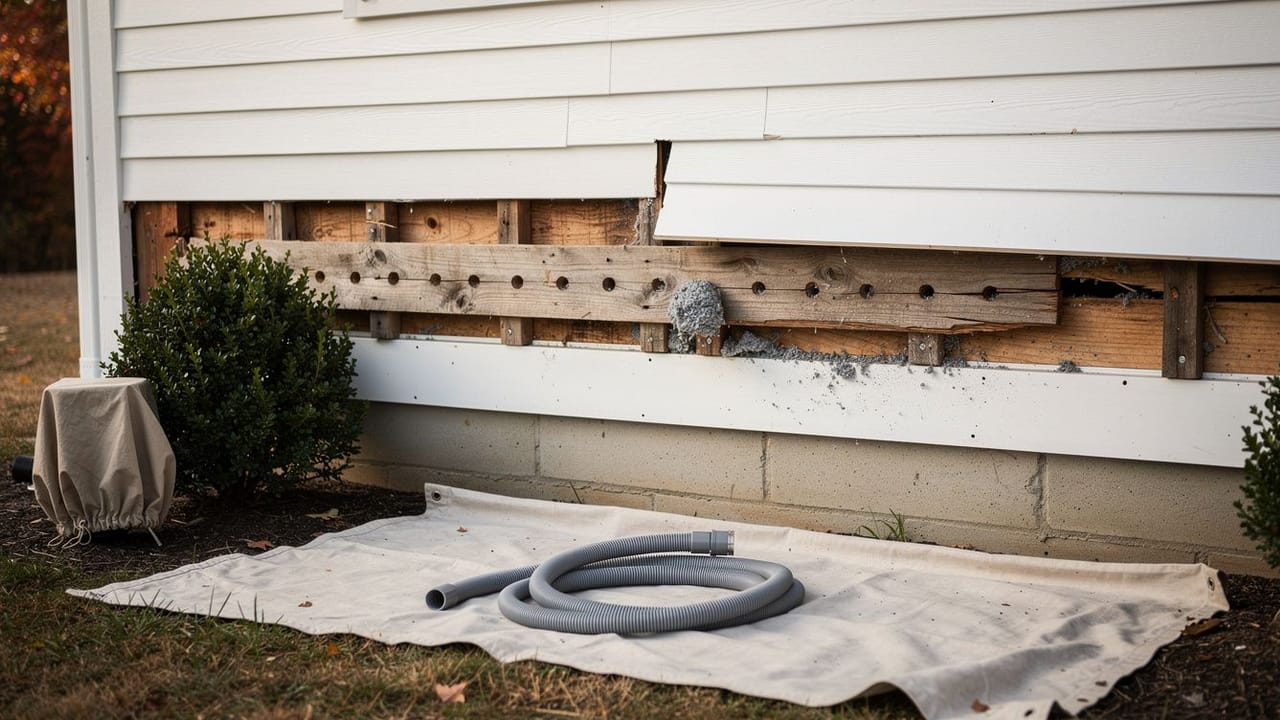
The usual way to fill a closed wall is dense packing. The Solution Center’s page on dense-pack insulation names densely packed cellulose and fiberglass as the favored methods for walls in existing homes, because packed tight the material doesn’t settle, fills the cavity completely and slows airflow. Cellulose, a fire-retardant fiber made from recycled newspaper and boxes, is the type DOE-funded weatherization programs favor. The holes go in from outside, with a course of siding loosened and put back, or from inside, and then they’re plugged and patched. Where blocking or cross bracing interrupts a bay, a second hole goes in below it. In a balloon-framed house, DOE’s exterior job aid says to block the bays at top and bottom first so the insulation doesn’t blow up into the attic or down into the basement.
Done right, an empty wall becomes an insulated one that also leaks less air. Done badly, it leaves voids above window headers and behind cross bracing, which is exactly what the infrared photos in PNNL’s guide show, and the wall ends up half insulated. Density is the number to ask a contractor about: the dense-pack page gives 3.5 to 4.5 pounds per cubic foot for cellulose and 1.8 to 2.6 for fiberglass, and it says reaching that takes a feel that only comes with experience. Every bay should be checked with an infrared camera before any hole is patched.
- Dense-pack cellulose: the usual choice for a closed wall; holds small amounts of water but breaks down when soaked
- Dense-pack fiberglass: rated just as favored, lighter, and not permanently damaged by a soaking
- Spray foam: the plaster or drywall comes off first, and closed-cell foam limits drying
- Any method: knob-and-tube wiring has to be dealt with first
Moisture, and why it matters in Middle Tennessee
Heat moving through an empty wall helps it dry. PNNL’s guide to spray foam in existing walls spells out what changes once the wall is insulated: less heat flows through, so the wall dries less, and if water has been getting in, adding insulation without fixing the leak first raises the risk of moisture damage. So the outside comes first. We check the windows, flashing and siding for the places water gets in and get those repaired before a single bay is filled. Drilling from outside also punctures whatever weather barrier sits behind the siding, and the blown-insulation guide says it has to be made whole again; working from inside leaves it untouched. The materials differ as well. Cellulose can hold small amounts of water but breaks down when it’s saturated, fiberglass isn’t permanently damaged by a soaking, and closed-cell foam limits drying toward the inside. On brick, the foam guide counts the wall as relatively safe only when the air gap behind the brick is open and the brick has its flashing and weep holes.
Where a vapor retarder belongs, if anywhere, depends on the climate zone, as the blown-insulation guide puts it. A Middle Tennessee house runs its air conditioning through humid summers and its heat through the winter, so we work out which way each filled wall needs to dry instead of copying a detail drawn for a colder state. Our post on insulation and humidity goes further into the vapor question.
What does a wall insulation job involve?
From outside, DOE’s exterior job aid has the crew protect the work area and cover the shrubs, loosen vinyl, aluminum or steel siding with a siding tool, drill and fill, then plug and seal the holes and reinstall the siding carefully. From inside, the interior job aid calls for protecting the floor and using drill shrouds and containment to keep the dust in, and the holes are patched or hidden behind a chair rail. PNNL’s finishing steps for interior holes are gypsum or foam plugs and joint compound, sanded smooth and then painted, so plan on fresh paint along those walls. On a brick house we often talk through working from inside, since it leaves the brick alone.
When the wall is properly filled, DOE’s job aids say its thermal performance improves and air leakage is reduced, which in a room means fewer drafts along the outside walls and a more even temperature. The wall still won’t match a new one. It can only hold as much insulation as the studs are deep, and the dense-pack page puts cellulose at R-3.2 to 3.5 per inch and fiberglass at R-4.2. Paired with air sealing at the attic floor and a dry crawl space, though, filled walls take much of the chill out of an old Nashville house. When you want to find out what’s inside yours, ask us for a free estimate.
Sources
- U.S. Department of Energy, Weatherization Installer Job Aid 9-2: Dense-Pack a Sidewall via Interior Blow (2024) — Older houses often lack exterior wall insulation; floor protection, drill shrouds and containment; holes patched or covered with a chair rail; air leakage reduced
- Building America Solution Center (PNNL), Blown Insulation in Cavities of Existing Exterior Walls — Drill and fill; three ways to check a wall; old blown fill and batts; NEC on knob-and-tube; lead-safe rules before 1980; extra hole below blocking; voids above headers and behind bracing; infrared before patching; drainage plane breached from outside; vapor control by climate zone; interior patch, sand and paint
- U.S. Department of Energy, Weatherization Installer Job Aid 9-1: Dense-Pack a Sidewall via Exterior Blow (2024) — Blower door and infrared to verify the fill; balloon-framed walls blocked top and bottom; siding loosened with a siding tool and reinstalled; holes plugged and sealed; air leakage reduced
- Building America Solution Center, Dense Pack Insulation — Dense-packed cellulose and fiberglass the favored methods; no settling, slows airflow; cellulose favored by weatherization, fire-retardant, recycled paper; water tolerance of each; recommended densities; R-value per inch; installer experience
- Building America Solution Center (PNNL), Spray Foam Insulation in Cavities of Existing Exterior Walls — Insulated walls dry less, so fix leaks first; interior finishes removed for spray foam; closed-cell foam limits inward drying; brick needs an open air gap, flashing and weep holes
FAQ
Insulating the Empty Walls of an Older Nashville House — questions
Can you insulate walls without removing drywall or plaster?
Yes, with blown insulation. Dense-packed cellulose or fiberglass goes into each stud bay through holes drilled from outside, with the siding loosened and put back, or from inside, and the holes are plugged and patched afterward. Spray foam is different, since the usual retrofit method takes the interior finish off first. Any knob-and-tube wiring has to be handled by an electrician before insulation goes in.
Is dense-pack cellulose or foam better for old walls?
For a wall you want to leave closed, dense-packed cellulose or fiberglass. Both are favored methods for existing walls, both go in through small holes, and neither settles when packed to the right density. Spray foam usually means opening the wall, and closed-cell foam slows how the wall dries if water gets in. Whichever material is used, the result depends on a careful installer.
Will insulating my walls cause moisture problems?
It can if the wall was already taking on water, because an insulated wall dries less than an empty one. Find and fix leaks at the windows, flashing and siding first, make sure the weather barrier behind the siding is made whole again wherever it was drilled, and pick a material suited to how that wall needs to dry.
How can you tell if walls have insulation?
Look inside the wall. Cut a small opening, check the cavity beside an electrical box with the power off, or scan the wall with an infrared camera, which works best on a cold morning when the indoor and outdoor temperatures are far apart. In an infrared image the empty stud bays show up darker than the filled ones.